Sports and overuse pain
Sports and overuse pain often develops when the same tissues are repeatedly loaded without enough recovery, or when other areas are not moving or sharing the load as well as they could. Dr. McDonald looks at the painful area, but also at how the joints, muscles, and connective tissues above and below it are working together, and whether restriction or compensation may be adding strain.
or call (616) 342-2295

What commonly contributes
Training load
A rapid increase in activity, intensity, or volume can exceed what the body is prepared to tolerate.
Compensation elsewhere
When one area is painful or moving differently, other joints and muscles may take on more of the load.
Repetitive movement
Running, throwing, lifting, swimming, and other repeated motions can place ongoing stress on the same tissues.
Not enough recovery
Training or activity without enough recovery can make it harder for irritated tissues to settle and adapt.
Hands-on treatment (OMT)
How OMT may help
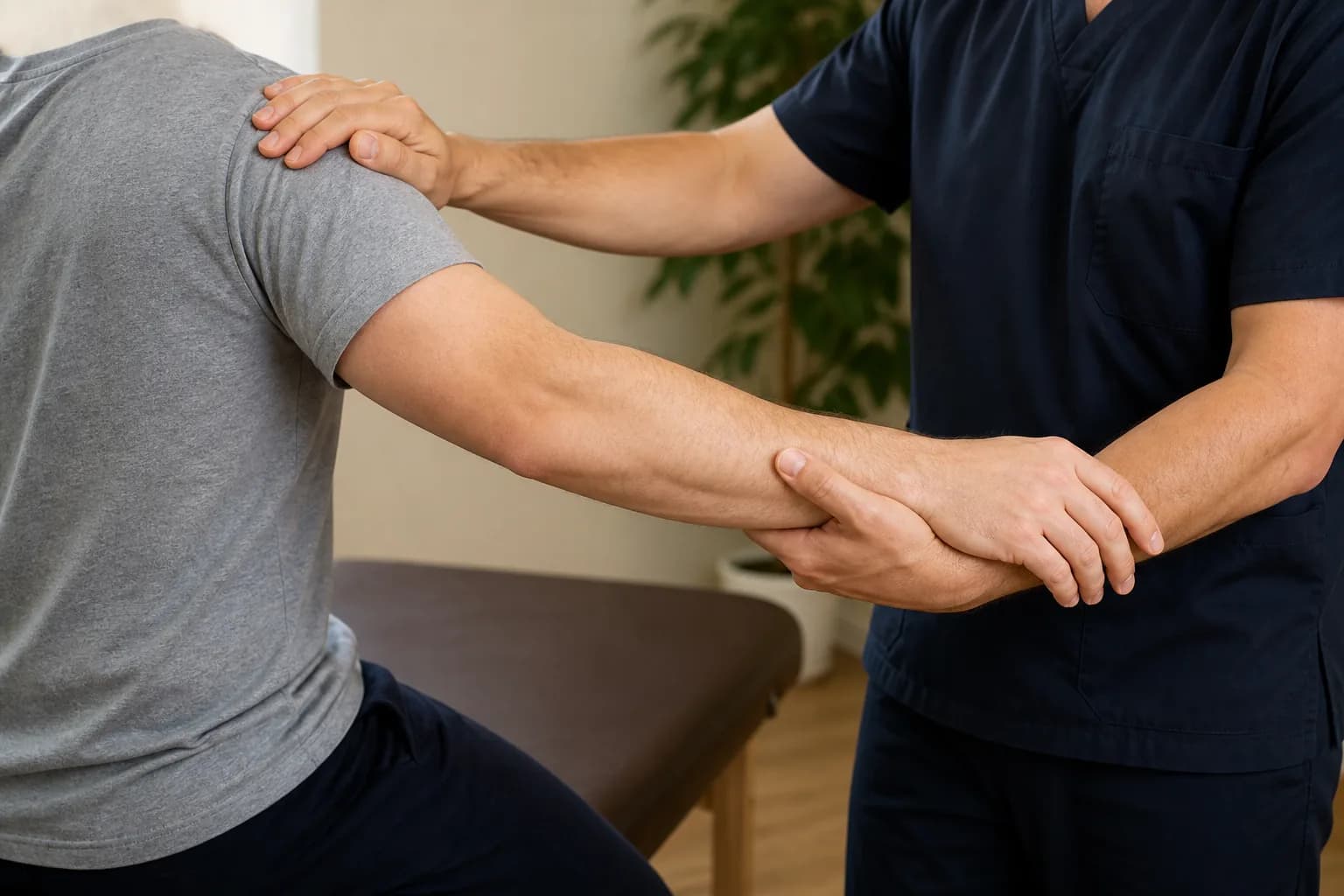
Dr. McDonald examines before he treats: palpation and motion testing, joint by joint, along the whole kinetic chain rather than only where it hurts. Treatment is gentle and specific, using techniques such as muscle energy, myofascial release, and counterstrain.
- Can help ease overworked muscle and tendon
- Often improves motion along the kinetic chain
- May take load off the areas compensating for a restriction
- Comes with practical guidance on training load and recovery
If you need more than OMT
Hands-on treatment is not always the whole answer, and Dr. McDonald does not work alone.
Imaging
If your recovery needs a closer look, he can order it, including X-rays and MRI.
Referrals
He sends and receives referrals with physicians in physical medicine and rehabilitation, orthopedics, neurology, and family medicine, and with physical therapists. If your care should involve one of them, he will point you there.
Ready when you are
Start with a conversation
Describe what is going on, and Dr. McDonald will tell you whether hands-on treatment can help.