Postural and repetitive strain
Pain and stiffness can build when the body spends too much time in the same positions or repeats the same movements without enough variation. Dr. McDonald looks at how the spine, ribs, shoulders, pelvis, and surrounding tissues are moving together, and where restriction may be forcing other areas to compensate. The goal is to restore more options for movement so the body does not have to keep relying on the same pattern. When appropriate, he may also recommend specific stretches, mobility work, or exercises to help reinforce those changes between visits.
or call (616) 342-2295

What commonly contributes
The workstation
A monitor, chair, or keyboard pulls the head, shoulders, or wrists out of neutral.
One motion for hours
Typing, scrolling, or manual work repeats the same movement all day.
Long stretches of sitting
Little movement in between leaves joints stiff.
Carrying on one side
A bag, a child, or equipment on the same side loads one side more.
Hands-on treatment (OMT)
How OMT may help
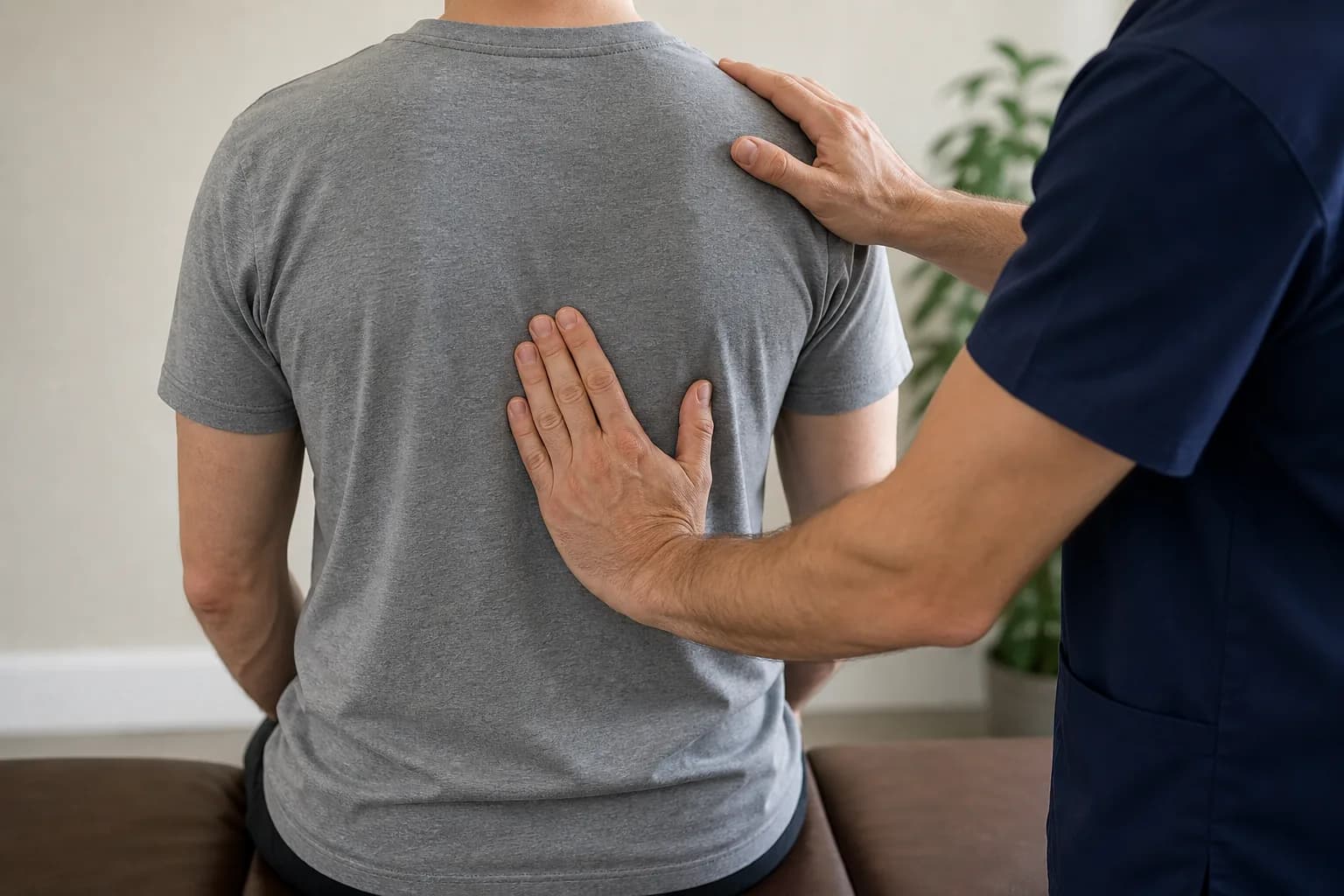
Dr. McDonald examines before he treats: palpation and motion testing through the neck, upper back, and shoulders as one pattern. Treatment is gentle and specific, using techniques such as myofascial release and muscle energy.
- Can help release the tissue that stays tight all day
- Often improves motion in the upper back and shoulders
- May ease the load of head-forward hours
- Comes with practical guidance on the setup behind it
If you need more than OMT
Hands-on treatment is not always the whole answer, and Dr. McDonald does not work alone.
Imaging
If your recovery needs a closer look, he can order it, including X-rays and MRI.
Referrals
He sends and receives referrals with physicians in physical medicine and rehabilitation, orthopedics, neurology, and family medicine, and with physical therapists. If your care should involve one of them, he will point you there.
Ready when you are
Start with a conversation
Describe what is going on, and Dr. McDonald will tell you whether hands-on treatment can help.