
Neck pain
Neck pain can come from the joints, muscles, and connective tissues of the neck and upper back, and the source is not always exactly where the pain is felt. Dr. McDonald looks at how the neck, upper back, ribs, and shoulders are moving together, and where restriction or compensation may be placing extra strain on the area.
or call (616) 342-2295

What commonly contributes
Prolonged positions
Desk work, driving, phone use, or other sustained positions can keep the neck and upper back under prolonged load.
Sleep or an unfamiliar position
An awkward night of sleep or hours in a position your body is not used to can leave the neck painful or restricted.
Upper back and rib restriction
When the upper back, ribs, or shoulders are not moving as freely, the neck may have to take on more of the movement and strain.
Prior strain or injury
Whiplash, sports injuries, or previous strains can leave behind guarding or altered movement that continues to contribute to symptoms.
Hands-on treatment (OMT)
How OMT may help
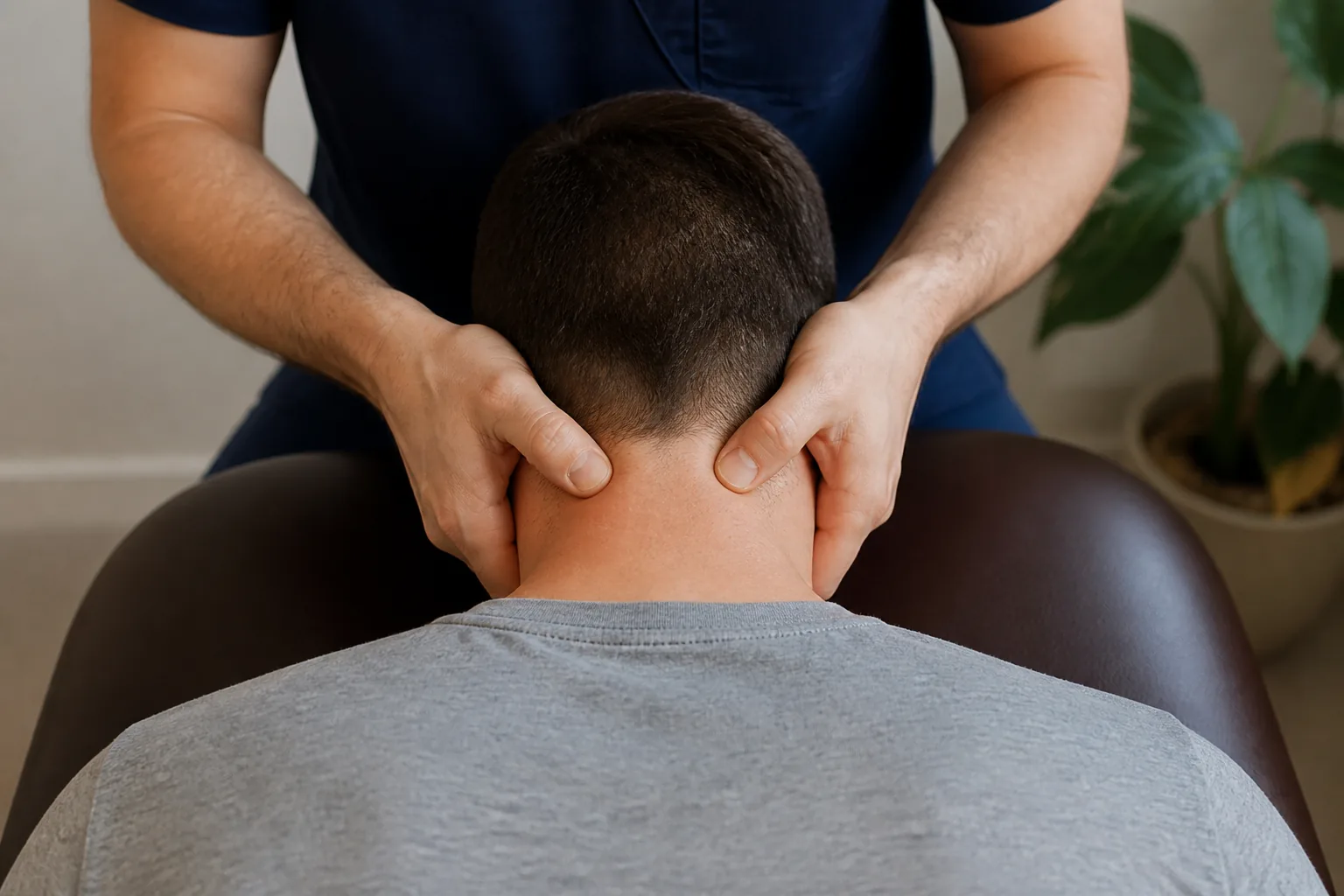
Dr. McDonald examines before he treats: palpation and motion testing, segment by segment, from the base of the skull through the upper back. Treatment is gentle and specific, using techniques such as counterstrain, muscle energy, and myofascial release.
- Can help release muscle tension from the skull base to the shoulders
- Often improves motion in stiff neck segments
- May ease the upper-back restriction the neck is working against
- Comes with practical guidance on desk and sleep setup
If you need more than OMT
Hands-on treatment is not always the whole answer, and Dr. McDonald does not work alone.
Imaging
If your recovery needs a closer look, he can order it, including X-rays and MRI.
Referrals
He sends and receives referrals with physicians in physical medicine and rehabilitation, orthopedics, neurology, and family medicine, and with physical therapists. If your care should involve one of them, he will point you there.
Ready when you are
Start with a conversation
Describe what is going on, and Dr. McDonald will tell you whether hands-on treatment can help.